SHARE THIS ARTICLE
CASE STUDIES
Wells Production Optimisation: Sand Management for a North Sea Gas Storage Pressure Reduction Campaign
Location: North Sea
Industry: Oil and Gas
A major UK gas storage field approaching the end of field life required a controlled pressure reduction campaign to recover remaining gas before decommissioning. Ageing well integrity, changing operating conditions, and an increased risk of sand production meant the operator needed specialist sand management and flow assurance support.
SMS provided onshore consultancy during multi-disciplinary risk assessments, then extended support offshore during critical well start-up and initial pressure reduction phases. This ensured 24-hour coverage during a period of elevated operational risk.
The Challenge:
The operator needed to reduce wellbore pressures safely while maintaining production from wells with known sand-production potential.
Lower topside operating pressures and medium-pressure (MP) compression increased drawdown across the reservoir sand face. This raised the risk of sand production, while higher flowrates also increased velocities in the wells and flowlines.
Key challenges included:
-
Starting up wells at lower operating pressures, increasing flow velocity and erosion potential.
-
Managing increased drawdown caused by the transition to MP compression.
-
Preventing excessive sand production while safely recovering remaining reserves.
-
Applying flow assurance controls and erosional velocity limits based on industry best practice.
-
Maintaining safe operations during well start-up and the initial pressure reduction phase.
A velocity limitation of 20 m/s was introduced for flowlines upstream of separation, in line with DNV GL RP-O501 guidance for managing sand production and erosion.
Solutions:
SMS delivered bespoke solids management consultancy and flow assurance support tailored to the gas storage application.
The team supported the development of well-specific operating guidelines, enabling controlled flow step tests for each well. This gave the reservoir team valuable insight into individual well behaviour and supported safer, data-led production optimisation.
SMS support included:
-
Multi-disciplinary risk assessments with onshore engineering consultancy.
-
Offshore support during well start-up and initial pressure reduction.
-
24-hour operational coverage during critical campaign phases.
-
Development of well operating guidelines and flow step test procedures.
-
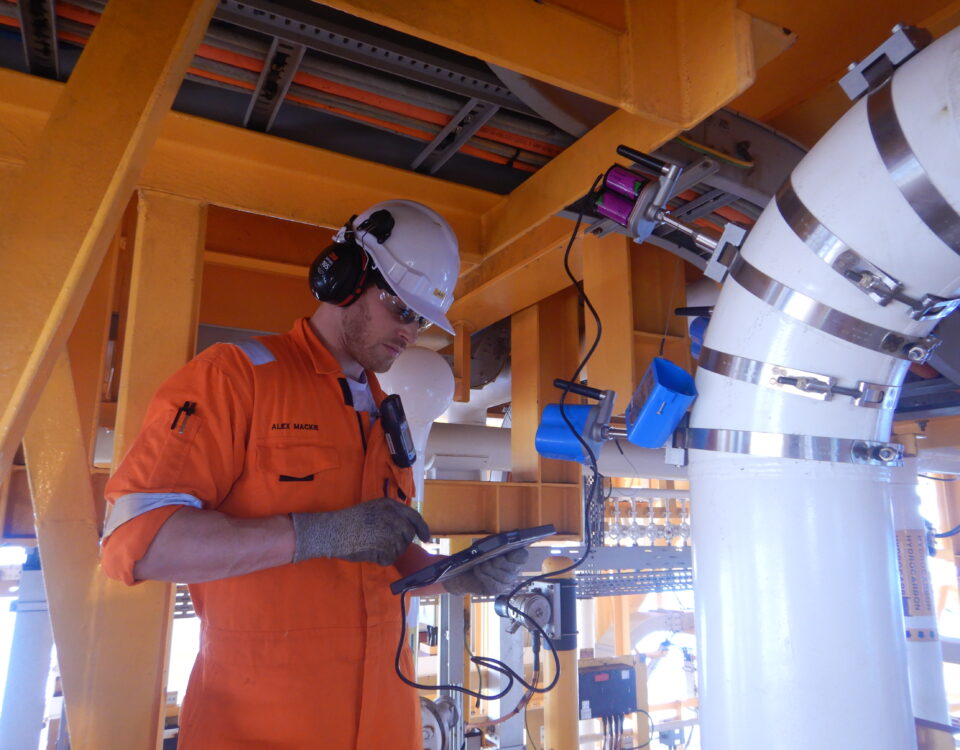
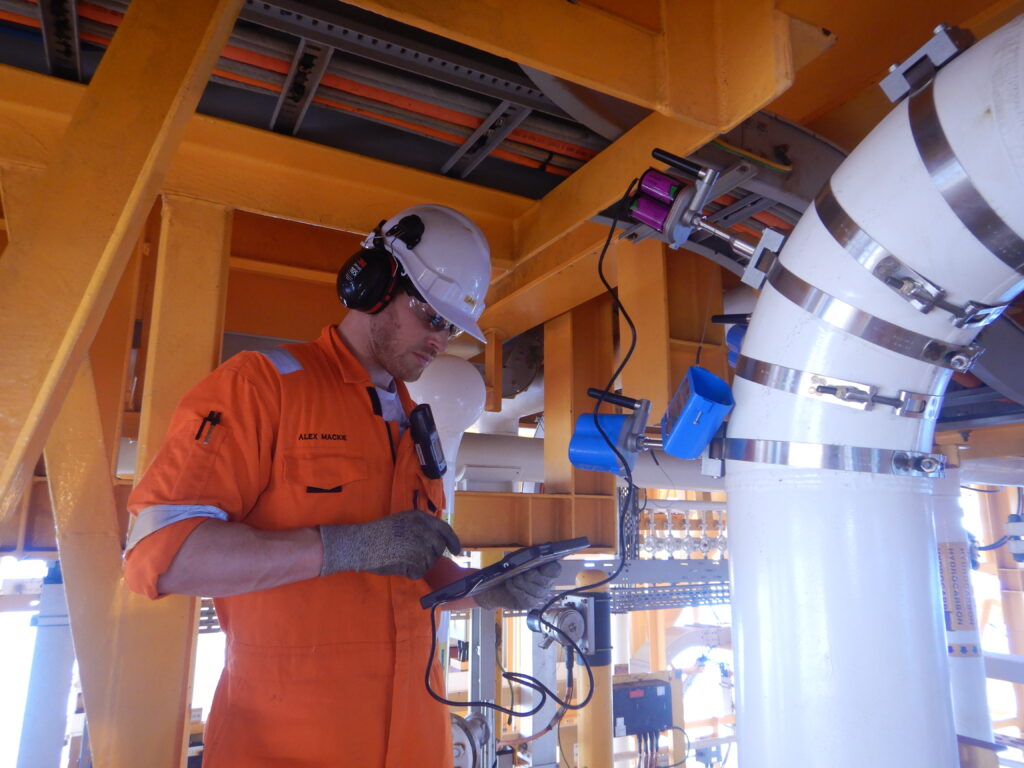
Acoustic sand monitoring and sand management advice to identify and manage solids production.
-
Flow assurance support to manage erosional velocity and production-rate limitations.
Results:
Thirteen wells were successfully optimised during the pressure reduction campaign.
Although each well initially showed liquids and transient solids, SMS’s real-time monitoring and technical support gave the operator the confidence to continue the controlled ramp-up safely.
The campaign demonstrated how targeted sand management consultancy can help operators balance production recovery with well integrity, erosion control, and operational safety.
Value to Client:
SMS’s approach goes beyond monitoring or removing sand. By investigating the root cause of solids production, SMS helps operators make better long-term operating decisions.
The project encouraged collaboration between production, integrity, facilities, and reservoir teams, allowing them to review the same data, understand why issues were occurring, and agree practical actions.
This collaborative approach helped the operator to:
-
Reduce integrity defects and erosion-related risks.
-
Avoid excessive sand production caused by producing wells too aggressively.
-
Improve cross-functional decision-making and reduce duplicated costs.
-
Make faster, better-informed operational decisions.
-
Achieve safer, more optimised production levels.