SHARE THIS ARTICLE
CASE STUDIES
Real-Time Structural Health Monitoring for a North Sea FPSO
Location: North Sea, UK
Industry: Oil & Gas
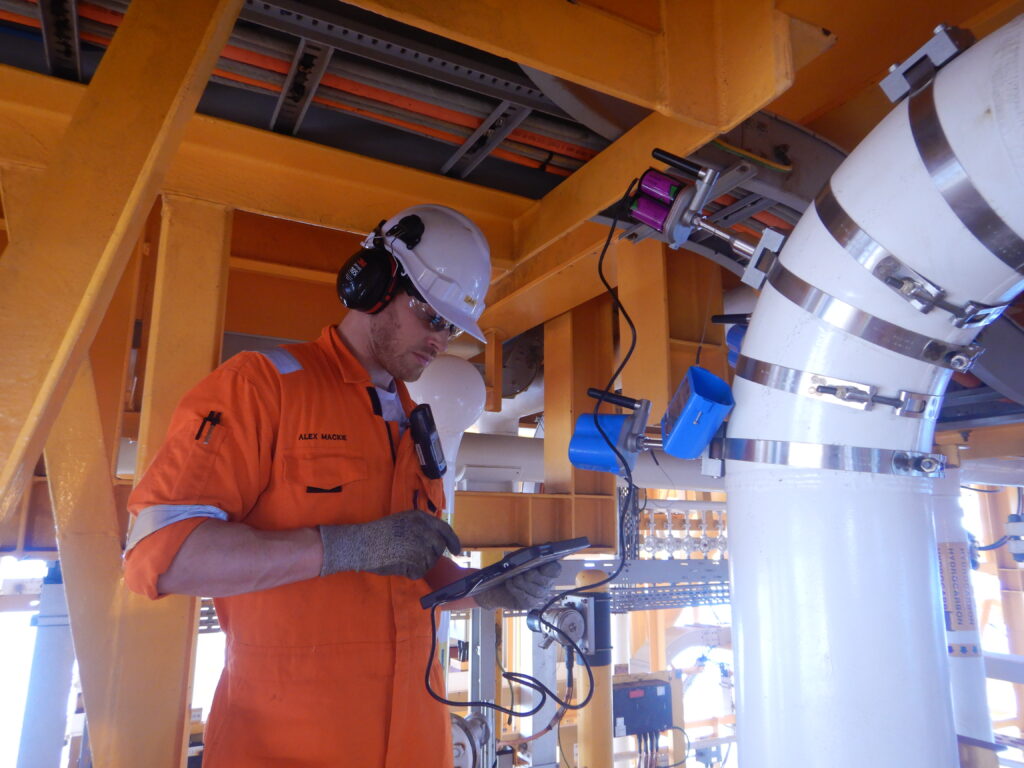
We conducted a six-month pilot of the real-time Structural Health Monitoring (SHM) system on an operating FPSO in the North Sea.
FPSOs working in harsh marine environments are exposed to ongoing structural loads that can contribute to progressive damage and fatigue over time. By continuously monitoring the vessel’s response, the Structural Health Monitoring (SHM) system gave the operator a clearer understanding of the vessel’s condition and supported more informed maintenance and intervention decisions
The challenge
Vessel-condition assessments, particularly fatigue assessments, are often based on assumed sea states, vessel responses, and design calculations. While these methods remain important, they may not fully represent the conditions experienced by a vessel during actual operations.
The client also faced several practical challenges:
-
Scheduled inspections were governed by fixed five-year intervals under Classification Society requirements.
-
As the vessel entered a later stage of its operating life, the client wanted to explore whether inspection and maintenance planning could become more targeted and cost-effective.
-
Important structural details were difficult to access or unsuitable for direct instrumentation.
-
Historical monitoring data was limited because most systems were not configured for long-term recording.
-
Existing fatigue information had been collected infrequently, leaving the client with limited confidence in the available assessment.
These limitations made it difficult to understand how the vessel was performing under different operating and environmental conditions.
The SHM solution
Real-time SHM system was installed to capture actual vessel-response data during normal FPSO operations. The system continuously recorded structural behaviour and used advanced algorithms to calculate fatigue exposure at selected high-risk locations.
The monitoring approach also enabled areas that were difficult or impractical to instrument directly to be assessed remotely. By coordinating the available sensor data with analytical models, the system provided insight into structural locations that would otherwise remain largely unmonitored.
Long-term data storage created an additional benefit. The operator could review historical vessel responses and relate past operating conditions to structural performance and fatigue accumulation.
Results
The six-month pilot confirmed that remote structural monitoring can support decisions about critical vessel areas that are difficult to instrument directly.
During the trial, the SHM system:
-
Calculated fatigue levels continuously at selected locations.
-
Assessed accumulated fatigue damage at key structural points.
-
Increased the client’s confidence in monitoring hard-to-reach areas remotely.
-
Created valuable operational and fatigue data for future assessments.
-
Remained on board after the pilot at the client’s request, supporting upcoming operations.
This result showed that the system could provide practical insight into vessel condition where conventional monitoring would be difficult or impractical.

Value to the client
The system supported the client’s maintenance programme and helped establish a Risk-Based Inspection (RBI) approach.
The monitoring data helped the client to:
-
Monitor difficult-to-access structural areas remotely.
-
Make more confident fatigue-related decisions.
-
Build a long-term record of vessel performance.
-
Plan maintenance activities using reliable operational data.
-
Improve capital expenditure planning.
-
Assess opportunities to extend the vessel’s service life.
-
Reduce reliance on fixed inspection intervals alone.
The system also generated detailed fatigue calculations throughout the trial. These results gave the client a clearer view of the vessel’s remaining structural life.
Conclusion
The North Sea FPSO pilot showed how real-time SHM can complement traditional structural assessments with data from actual vessel operations. By combining continuous monitoring, fatigue analysis, and long-term data retention, the system gave the operator a more practical basis for managing vessel integrity and planning future maintenance.
Read more about Dynamic Hull Monitoring
We conducted a six-month pilot of the real-time Structural Health Monitoring (SHM) system on an operating FPSO in the North Sea.
FPSOs working in harsh marine environments are exposed to ongoing structural loads that can contribute to progressive damage and fatigue over time. By continuously monitoring the vessel’s response, the Structural Health Monitoring (SHM) system gave the operator a clearer understanding of the vessel’s condition and supported more informed maintenance and intervention decisions
The challenge
Vessel-condition assessments, particularly fatigue assessments, are often based on assumed sea states, vessel responses, and design calculations. While these methods remain important, they may not fully represent the conditions experienced by a vessel during actual operations.
The client also faced several practical challenges:
-
Scheduled inspections were governed by fixed five-year intervals under Classification Society requirements.
-
As the vessel entered a later stage of its operating life, the client wanted to explore whether inspection and maintenance planning could become more targeted and cost-effective.
-
Important structural details were difficult to access or unsuitable for direct instrumentation.
-
Historical monitoring data was limited because most systems were not configured for long-term recording.
-
Existing fatigue information had been collected infrequently, leaving the client with limited confidence in the available assessment.
These limitations made it difficult to understand how the vessel was performing under different operating and environmental conditions.
The SHM solution
Real-time SHM system was installed to capture actual vessel-response data during normal FPSO operations. The system continuously recorded structural behaviour and used advanced algorithms to calculate fatigue exposure at selected high-risk locations.
The monitoring approach also enabled areas that were difficult or impractical to instrument directly to be assessed remotely. By coordinating the available sensor data with analytical models, the system provided insight into structural locations that would otherwise remain largely unmonitored.
Long-term data storage created an additional benefit. The operator could review historical vessel responses and relate past operating conditions to structural performance and fatigue accumulation.
Results
The six-month pilot confirmed that remote structural monitoring can support decisions about critical vessel areas that are difficult to instrument directly.
During the trial, the SHM system:
-
Calculated fatigue levels continuously at selected locations.
-
Assessed accumulated fatigue damage at key structural points.
-
Increased the client’s confidence in monitoring hard-to-reach areas remotely.
-
Created valuable operational and fatigue data for future assessments.
-
Remained on board after the pilot at the client’s request, supporting upcoming operations.
This result showed that the system could provide practical insight into vessel condition where conventional monitoring would be difficult or impractical.
Value to the client
The system supported the client’s maintenance programme and helped establish a Risk-Based Inspection (RBI) approach.
The monitoring data helped the client to:
-
Monitor difficult-to-access structural areas remotely.
-
Make more confident fatigue-related decisions.
-
Build a long-term record of vessel performance.
-
Plan maintenance activities using reliable operational data.
-
Improve capital expenditure planning.
-
Assess opportunities to extend the vessel’s service life.
-
Reduce reliance on fixed inspection intervals alone.
The system also generated detailed fatigue calculations throughout the trial. These results gave the client a clearer view of the vessel’s remaining structural life.
Conclusion
The North Sea FPSO pilot showed how real-time SHM can complement traditional structural assessments with data from actual vessel operations. By combining continuous monitoring, fatigue analysis, and long-term data retention, the system gave the operator a more practical basis for managing vessel integrity and planning future maintenance.
Read more about Dynamic Hull Monitoring