SHARE THIS ARTICLE
CASE STUDIES
Real-Time Particle Size Analyser
Location: Offshore Malaysia
Industry: Oil & Gas
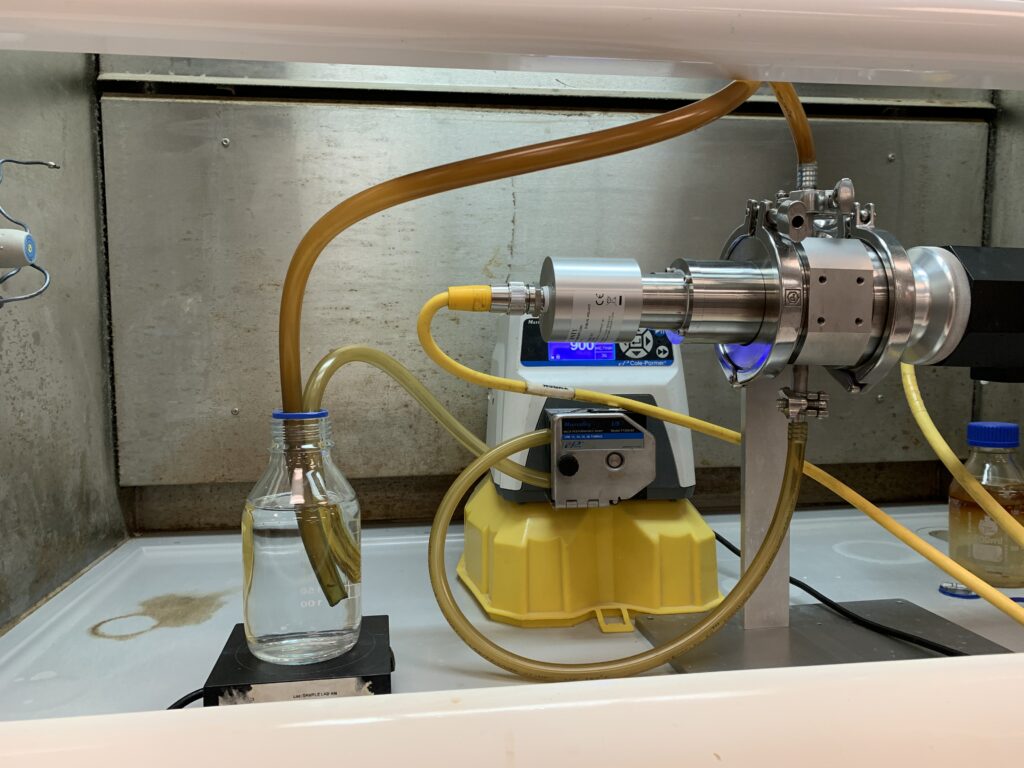
Many offshore oil and gas fields producing high sand or solids are not currently measuring Particle Size Distribution (PSD) due to high contamination levels in the process medium. The real-time PSD analyser works on the principle of presenting solids entrained in fluid (hydrocarbon and/or water) between a high-intensity light source and a microscopic camera to measure particle size and concentration without breaking containment
Challenge / Summary:
HSE – To negate the requirement for manual extraction and handling of samples which pose a risk to personnel due to the presence of TENORM, Mercury and H2S.
Data Availability – To provide accurate PSD datasets in real-time instead of shipping samples onshore for lab analysis.
Solution:
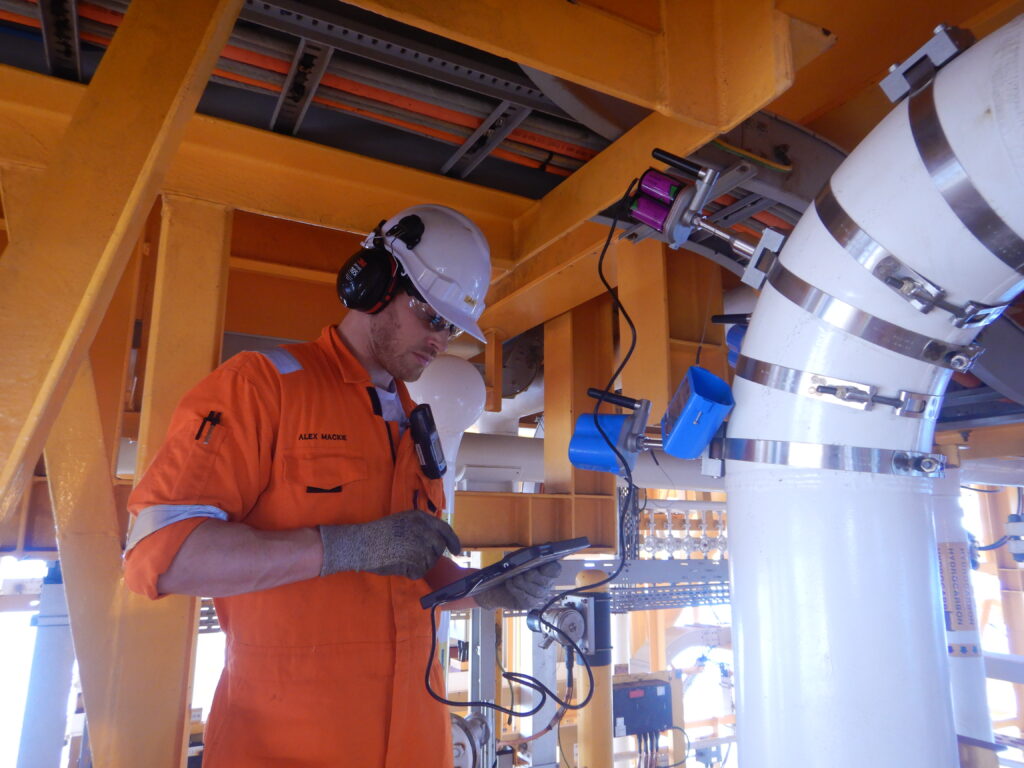
- SMS mobilised and installed their real-time particle size analyser in an online, closed-loop configuration to flow sample fluid from existing sample points through the analyser to closed drains.
- The package design specification incorporated a 3-phase side-stream mini separator suitable for use under hazardous process conditions. The mini separator ensured samples were suspended in a stable base fluid (90% water) to enable accurate particle analysis and provided necessary pressure regulation.
- A batch sampling approach was utilised whereby a known volume of liquid was flowed through the analyser flowcell and the sand particles analysed on a per well basis.
- Particles of size range 0.7 – 300 microns were analysed, and the respective imaging and distribution data were output to a service PC in real-time
Results:
- SMS successfully conducted real-time PSD analysis for 27 wells across the field.
- Throughout all phases of the operation, PSD analysis was conducted with a minimum of 6 litres of fluid, three times per well for verification of datasets and optimised data accuracy.
- All sample imaging was recorded in the acquisition software, thus enabling results to be optimised post-job through refinement, particle filter thresholding.
- Dn and Dv (%) data outputs provided the client with invaluable data to support the wellhead desander design specification
Value to Client:
- Reduced HSE Risk to Personnel
– Closed loop system reducing the risk of potential exposure to harmful contaminants
- Reliable Real-time Data
– Immediate data analysis and availability, enabling dynamic decision making
- Reduced OPEX Cost
– Minimal personnel and equipment required on-site - Repeatable and Reliable
– The batch sampling process is quickly repeatable, with multiple runs per well for data averaging and obtaining representative results
– PSD data obtained directly from the well flowline upstream of any process/separation
– Sufficient solid samples captured for representative sample data
Many offshore oil and gas fields producing high sand or solids are not currently measuring Particle Size Distribution (PSD) due to high contamination levels in the process medium. The real-time PSD analyser works on the principle of presenting solids entrained in fluid (hydrocarbon and/or water) between a high-intensity light source and a microscopic camera to measure particle size and concentration without breaking containment
Challenge / Summary:
HSE – To negate the requirement for manual extraction and handling of samples which pose a risk to personnel due to the presence of TENORM, Mercury and H2S.
Data Availability – To provide accurate PSD datasets in real-time instead of shipping samples onshore for lab analysis.
Solution:
- SMS mobilised and installed their real-time particle size analyser in an online, closed-loop configuration to flow sample fluid from existing sample points through the analyser to closed drains.
- The package design specification incorporated a 3-phase side-stream mini separator suitable for use under hazardous process conditions. The mini separator ensured samples were suspended in a stable base fluid (90% water) to enable accurate particle analysis and provided necessary pressure regulation.
- A batch sampling approach was utilised whereby a known volume of liquid was flowed through the analyser flowcell and the sand particles analysed on a per well basis.
- Particles of size range 0.7 – 300 microns were analysed, and the respective imaging and distribution data were output to a service PC in real-time
Results:
- SMS successfully conducted real-time PSD analysis for 27 wells across the field.
- Throughout all phases of the operation, PSD analysis was conducted with a minimum of 6 litres of fluid, three times per well for verification of datasets and optimised data accuracy.
- All sample imaging was recorded in the acquisition software, thus enabling results to be optimised post-job through refinement, particle filter thresholding.
- Dn and Dv (%) data outputs provided the client with invaluable data to support the wellhead desander design specification
Value to Client:
- Reduced HSE Risk to Personnel
– Closed loop system reducing the risk of potential exposure to harmful contaminants
- Reliable Real-time Data
– Immediate data analysis and availability, enabling dynamic decision making
- Reduced OPEX Cost
– Minimal personnel and equipment required on-site - Repeatable and Reliable
– The batch sampling process is quickly repeatable, with multiple runs per well for data averaging and obtaining representative results
– PSD data obtained directly from the well flowline upstream of any process/separation
– Sufficient solid samples captured for representative sample data