SHARE THIS ARTICLE
CASE STUDIES
Real-Time Dynamic Hull Monitoring System Pilot on North Sea FPSO
Location: North Sea, UK
Industry: Oil & Gas
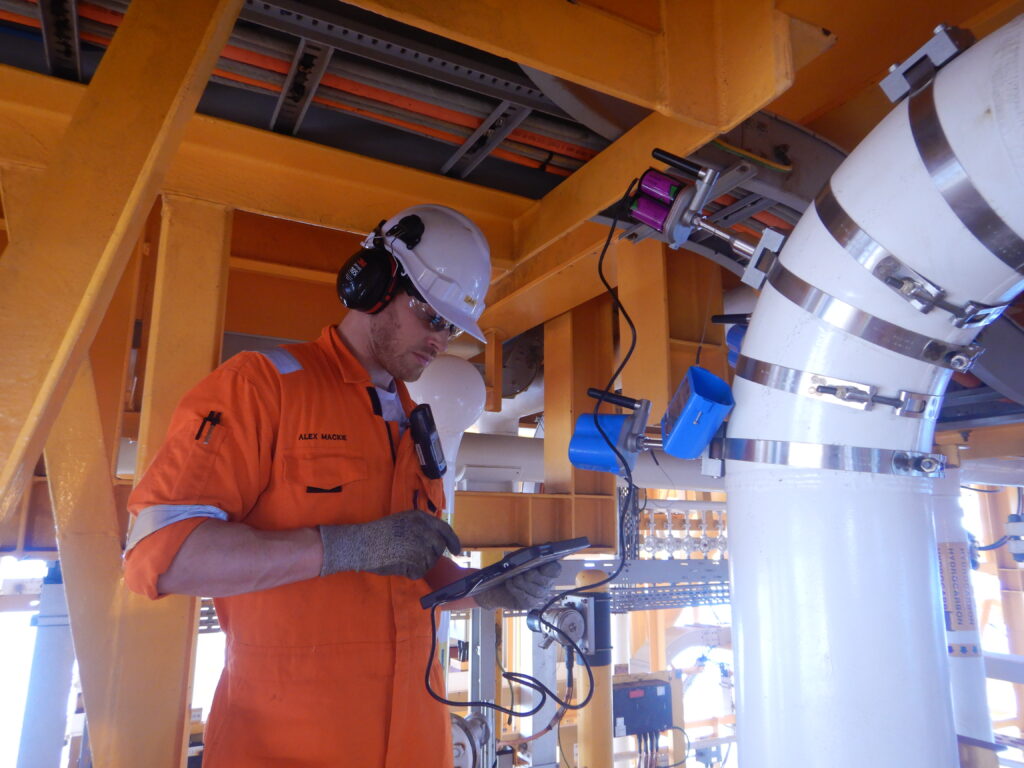
The pilot of SMS’s real-time Structural Health Monitoring (SHM) system was deployed on a working FPSO in the North Sea and ran for six months.
Ship operations in the North Sea are prone to progressive damage due to harsh marine environments.
The real-time SHM provides operators with continual insights into the vessel’s condition, enabling informed maintenance and intervention decisions that result in significant lifecycle savings.
Challenges:
- Vessel health (particularly regarding fatigue) is typically examined as a technical exercise using assumed sea conditions and vessel responses.
- Vessel scheduled maintenance plans are rigidly defined to take place every five years as per Classification Society guidance, operators of late life vessels have a desire to decrease this frequency to lower operating costs.
- Critical structural details in vessels are difficult to monitor directly due to being hard to reach or situated where it is unreasonable or impossible to install instrumentation.
- The data of most systems is rarely recorded for long duration, restricting the ability of operators to make informed decisions about vessel performance under different conditions.
- The existing fatigue data for the client was collected infrequently, and the client has limited confidence in the findings.
Key Benefits:
- The real-time system provides actual vessel data, allowing for greater accuracy in the technical assessment and the potential to replace the traditional approach with a more precise method.
- Advanced algorithms calculate the fatigue experienced at key hotspots.
- Unreachable high-risk areas can be monitored remotely via the coordinated response of the system.
- Data is held in perpetuity allowing for historical review of operations which can impact the vessels longevity.
Results:
The trial demonstrated a successful application of the remote monitoring principles, giving confidence to clients that the system can be used to make informed decisions about critical details of the vessel which otherwise cannot be instrumented.
Fatigue calculations were performed for the duration of the trial, giving an assessment of the accumulated fatigue damage at select points across the vessel.
The client requested that the system remain on board following the trial period so that they may utilise it for their upcoming operations.

Value to Client:
The system has supported the client in their ongoing maintenance work and is acting as the bedrock to their newly introduced Risk Based Inspection (RBI) scheme.
The client now has confidence that otherwise unmonitorable locations can be ‘remotely instrumented’ using SMS’s SHM system.
The clients lack of usable fatigue data has been corrected by the SHM system, having generated a wealth of fatigue calculations through the trial period the client is seeking to extend this information gathering by keeping the system.
This improved understanding of the structural fatigue life of the vessel allows for improved CAPEX planning by optimising the service life of the vessel.
The pilot of SMS’s real-time Structural Health Monitoring (SHM) system was deployed on a working FPSO in the North Sea and ran for six months.
Ship operations in the North Sea are prone to progressive damage due to harsh marine environments.
The real-time SHM provides operators with continual insights into the vessel’s condition, enabling informed maintenance and intervention decisions that result in significant lifecycle savings.
Challenges:
- Vessel health (particularly regarding fatigue) is typically examined as a technical exercise using assumed sea conditions and vessel responses.
- Vessel scheduled maintenance plans are rigidly defined to take place every five years as per Classification Society guidance, operators of late life vessels have a desire to decrease this frequency to lower operating costs.
- Critical structural details in vessels are difficult to monitor directly due to being hard to reach or situated where it is unreasonable or impossible to install instrumentation.
- The data of most systems is rarely recorded for long duration, restricting the ability of operators to make informed decisions about vessel performance under different conditions.
- The existing fatigue data for the client was collected infrequently, and the client has limited confidence in the findings.
Key Benefits:
- The real-time system provides actual vessel data, allowing for greater accuracy in the technical assessment and the potential to replace the traditional approach with a more precise method.
- Advanced algorithms calculate the fatigue experienced at key hotspots.
- Unreachable high-risk areas can be monitored remotely via the coordinated response of the system.
- Data is held in perpetuity allowing for historical review of operations which can impact the vessels longevity.
Results:
The trial demonstrated a successful application of the remote monitoring principles, giving confidence to clients that the system can be used to make informed decisions about critical details of the vessel which otherwise cannot be instrumented.
Fatigue calculations were performed for the duration of the trial, giving an assessment of the accumulated fatigue damage at select points across the vessel.
The client requested that the system remain on board following the trial period so that they may utilise it for their upcoming operations.
Value to Client:
The system has supported the client in their ongoing maintenance work and is acting as the bedrock to their newly introduced Risk Based Inspection (RBI) scheme.
The client now has confidence that otherwise unmonitorable locations can be ‘remotely instrumented’ using SMS’s SHM system.
The clients lack of usable fatigue data has been corrected by the SHM system, having generated a wealth of fatigue calculations through the trial period the client is seeking to extend this information gathering by keeping the system.
This improved understanding of the structural fatigue life of the vessel allows for improved CAPEX planning by optimising the service life of the vessel.