

SHARE THIS ARTICLE
BLOG
Asset Integrity Management for the Energy & Water Industry
14 Nov 2025
Key takeaways
- Asset Integrity Management (AIM) is essential for maintaining operational safety, reliability, and efficiency in energy and water industries, protecting human life, and ensuring environmental compliance.
- Adoption of advanced digital technologies (IoT sensors, AI-driven analytics) significantly enhances AIM effectiveness, enabling real-time monitoring, predictive maintenance, and informed decision-making.
- Effective AIM strategies help organisations proactively reduce risks, minimise environmental incidents, extend asset lifespan, and comply with strict regulatory standards (e.g., ISO 55000, API 580/581).
- Optimising AIM requires careful partner selection, emphasising experience, advanced technology, and technical expertise to ensure long-term operational success and sustainability.
Introduction
Asset Integrity Management is an essential component in maintaining operational safety, efficiency, and reliability, particularly within the energy and water industries.
Industries like oil and gas, geothermal, and water treatment depend on intricate infrastructure including pipelines and storage tanks as well as offshore platforms and treatment facilities. Maintaining the integrity of these critical assets isn’t just about compliance; it’s essential for safeguarding lives, protecting the environment, and ensuring uninterrupted operations.
Industries are increasingly adopting digital solutions like advanced sensors, Internet of Things (IoT) technologies, and AI-driven analytics to enhance their asset integrity management capabilities. These innovations provide real-time monitoring, predictive insights, and smarter decision-making to protect critical infrastructure and optimise operations.
Implementing a robust AIM strategy helps organisations proactively identify risks, prevent equipment failures, and comply with stringent regulatory standards.
What is an Asset Integrity Management System (AIM)?
An Asset Integrity Management System (AIM) includes systematic processes that industries such as energy, oil and gas, and water use to maintain critical asset performance. This approach helps prevent failures, reduce risks, and extend the life of vital infrastructure.
AIM ensures reliability, safety, and efficiency throughout an asset’s lifecycle. Its core elements include monitoring, inspection, risk assessments, preventive maintenance, and proactive actions to preserve infrastructure integrity.
Modern AIM practices are increasingly leveraging digitalisation, including IoT sensors and artificial intelligence, to achieve more accurate and timely assessments of asset condition. This digital approach enhances preventive actions, significantly reduces maintenance costs, and provides deeper insights for improved operational decisions.
As a result, AIM not only protects critical assets but also drives sustained economic benefits and long-term profitability.
The primary objectives of AIM include:
- Preventing asset failure: Early detection of potential issues to avoid unplanned downtime and costly failures.
- Ensuring safety: Protecting personnel, communities, and the environment from accidents and hazardous conditions caused by asset deterioration.
- Optimising performance: Enhancing asset reliability, improving operational efficiency, and maximising asset lifespan to drive long-term business value.
Also read: Ensuring Pipeline Integrity: Best Practices for Offshore Oil and Gas Operations
Note from SMS Technical Assurance Manager
Asset Integrity Management Systems (AIMS) and Asset Life Extension Projects (ALEP) make up a large portion of SMS commissioning projects. In the oil and gas industry, three key monitoring technologies are essential to these programs: Acoustic Sand Monitoring, Real-Time Ultrasonic Wall Thickness Monitoring, and Intrusive Erosion/Corrosion Probes. Each technology serves a distinct purpose in ensuring that critical infrastructure such as pipelines, pressure vessels, flowlines, and wellheads remains safe, reliable, and compliant throughout its operational life.
A recent ALEP project for a client’s offshore facility involved installing a Long-Term Compression (LTC) module. This upgrade helps boost the pressure to draw more gas from existing wells, increasing gas production.
This solution clearly works well for a depleted reservoir but also has important risks. The increased drawdown and higher flow velocities can cause severe erosion, especially if sand from the wellbore gets carried along with the flow.
As a mitigation strategy, the client requested real-time sand and erosion surveillance systems to be installed on all known sand-producing wells, which is when SMS was brought in to support the project.
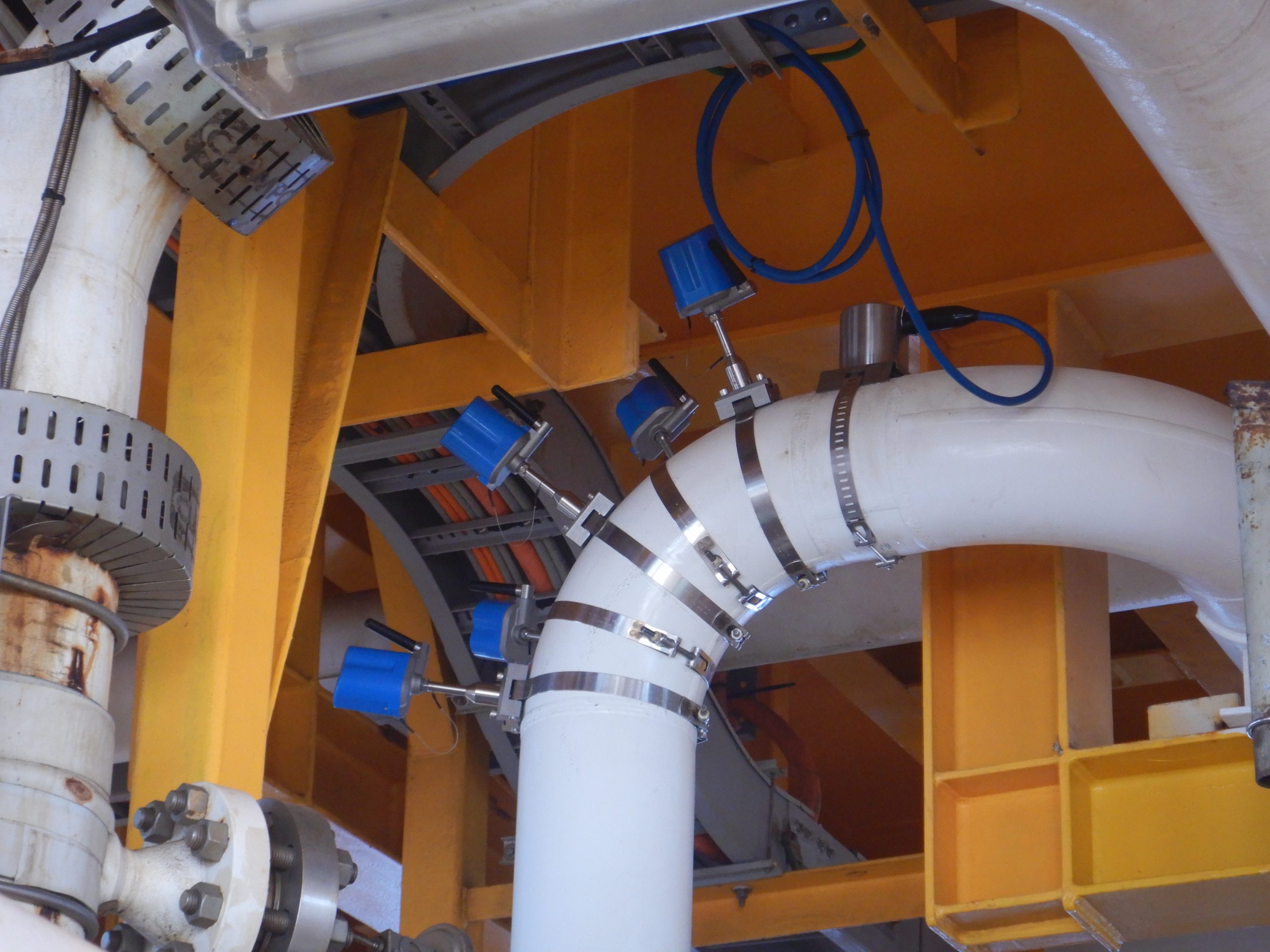
Acoustic Sand Detectors and Wireless Real-Time UT Wall Thickness monitoring arrays were installed at critical points on the flowlines where fluid velocity is highest. This data empowered the client to manage wells precisely, maintaining production at the Maximum Sand Free Rates (MSFR). This approach helps prevent pipeline erosion and extend asset life.
The Wireless UT instruments transmit absolute wall thickness in real time, triggering HIHI alarms in the DCS when thickness values reach the minimum allowable limit. This allows operators to plan spool replacements during scheduled shutdowns instead of shutting wells down spontaneously for remedial action. These systems will undoubtedly save the client significant CAPEX over time while providing the confidence to optimise production output.
Why AIM matters for the energy and water industry?
The energy and water industries face unique challenges due to complex infrastructure, harsh operational environments, and strict regulatory requirements.
Oil and gas operations, renewable energy facilities, and water management systems must continually deal with corrosion, material degradation, and mechanical stresses.
Asset Integrity Management (AIM) directly addresses these challenges by:
- Reducing operational risks: AIM identifies potential threats early, minimising the likelihood of catastrophic failures and protecting workers, communities, and the environment.
- Ensuring regulatory compliance: Industries must adhere to stringent regulatory standards such as ISO 55000 (asset management) and API 580/581 (risk-based inspection standards for oil and gas). AIM programs help organisations stay aligned with evolving standards, avoiding fines and legal liabilities while demonstrating environmental responsibility.
Moreover, the energy and water industries often face challenges related to aging infrastructure. AIM specifically addresses these challenges by systematically identifying asset deterioration, prioritising repairs and replacements, and extending the operational lifespan of critical infrastructure.
Investing in a structured AIM program is critical for the long-term safety, efficiency, and sustainability of energy and water assets.
Asset integrity management strategy
1. Corrosion monitoring and prevention
Corrosion significantly impacts asset performance, reliability, and lifespan. Unchecked corrosion can lead to costly failures, downtime, and severe safety hazards.
SMS Integrity provides advanced sand and corrosion monitoring solutions that detect early signs of degradation, allowing timely preventive action. This continuous monitoring approach helps businesses manage corrosion risks effectively and sustain asset performance
2. Remote and real-time monitoring solutions
Remote and real-time monitoring solutions are essential components of predictive maintenance strategies. Continuous monitoring reduces unplanned downtime by detecting anomalies and risks instantly, allowing immediate corrective actions.
SMS Integrity’s remote monitoring capabilities include advanced real-time analytics and particle size analysis, ensuring timely detection of potential issues and enabling precise decision-making.
3. Structural integrity assessment
Structural integrity assessments play a critical role in preventing catastrophic failures. These assessments evaluate the physical condition of infrastructure, identifying weaknesses before they lead to serious incidents.
Regular structural assessments safeguard assets, protect human life, and support ongoing operational stability, reducing the risk of unforeseen asset failures and costly downtime.
How to implement asset integrity management optimisation?
Successfully optimising your Asset Integrity Management strategy involves clear and actionable steps:
- Initial assessment and audit: Evaluate current asset conditions, identify critical assets, and assess risks thoroughly.
- Customised monitoring and inspection schedules: Develop tailored inspection plans focusing on high-risk assets, ensuring timely interventions and maintenance.
- Continuous improvement through real-time data analytics: Leverage advanced analytics and real-time monitoring to track asset performance, anticipate issues, and proactively enhance asset reliability and operational efficiency.
How to choose the right asset integrity management partner?
Selecting the right Asset Integrity Management partner is crucial for long-term asset performance and operational success. Consider these critical factors:
- Experience: Choose a partner with a proven track record in your industry, demonstrating successful AIM implementations.
- Technology: Ensure your partner uses advanced monitoring tools, real-time analytics, and state-of-the-art inspection techniques.
- Expertise: Verify the team’s technical capabilities, qualifications, and depth of knowledge in asset management, corrosion control, and structural assessments.
SMS Integrity combines extensive industry experience, innovative technology solutions, and unmatched technical expertise to deliver effective and reliable asset integrity management. Our proven strategies and specialised services ensure your assets remain safe, compliant, and performing optimally throughout their lifecycle.
Conclusion
Asset Integrity Management is vital for achieving sustainability and operational excellence within the energy and water industries.
Effective AIM strategies not only protect assets, employees, and the environment but also enhance reliability, reduce costs, and ensure regulatory compliance.
Prioritising AIM as a strategic business investment positions your organisation for long-term success and resilience. Proactively safeguarding critical infrastructure today ensures operational safety, performance, and sustainability for years to come.
Key takeaways
- Asset Integrity Management (AIM) is essential for maintaining operational safety, reliability, and efficiency in energy and water industries, protecting human life, and ensuring environmental compliance.
- Adoption of advanced digital technologies (IoT sensors, AI-driven analytics) significantly enhances AIM effectiveness, enabling real-time monitoring, predictive maintenance, and informed decision-making.
- Effective AIM strategies help organisations proactively reduce risks, minimise environmental incidents, extend asset lifespan, and comply with strict regulatory standards (e.g., ISO 55000, API 580/581).
- Optimising AIM requires careful partner selection, emphasising experience, advanced technology, and technical expertise to ensure long-term operational success and sustainability.
Introduction
Asset Integrity Management is an essential component in maintaining operational safety, efficiency, and reliability, particularly within the energy and water industries.
Industries like oil and gas, geothermal, and water treatment depend on intricate infrastructure including pipelines and storage tanks as well as offshore platforms and treatment facilities. Maintaining the integrity of these critical assets isn’t just about compliance; it’s essential for safeguarding lives, protecting the environment, and ensuring uninterrupted operations.
Industries are increasingly adopting digital solutions like advanced sensors, Internet of Things (IoT) technologies, and AI-driven analytics to enhance their asset integrity management capabilities. These innovations provide real-time monitoring, predictive insights, and smarter decision-making to protect critical infrastructure and optimise operations.
Implementing a robust AIM strategy helps organisations proactively identify risks, prevent equipment failures, and comply with stringent regulatory standards.
What is an Asset Integrity Management System (AIM)?
An Asset Integrity Management System (AIM) includes systematic processes that industries such as energy, oil and gas, and water use to maintain critical asset performance. This approach helps prevent failures, reduce risks, and extend the life of vital infrastructure.
AIM ensures reliability, safety, and efficiency throughout an asset’s lifecycle. Its core elements include monitoring, inspection, risk assessments, preventive maintenance, and proactive actions to preserve infrastructure integrity.
Modern AIM practices are increasingly leveraging digitalisation, including IoT sensors and artificial intelligence, to achieve more accurate and timely assessments of asset condition. This digital approach enhances preventive actions, significantly reduces maintenance costs, and provides deeper insights for improved operational decisions.
As a result, AIM not only protects critical assets but also drives sustained economic benefits and long-term profitability.
The primary objectives of AIM include:
- Preventing asset failure: Early detection of potential issues to avoid unplanned downtime and costly failures.
- Ensuring safety: Protecting personnel, communities, and the environment from accidents and hazardous conditions caused by asset deterioration.
- Optimising performance: Enhancing asset reliability, improving operational efficiency, and maximising asset lifespan to drive long-term business value.
Also read: Ensuring Pipeline Integrity: Best Practices for Offshore Oil and Gas Operations
Note from SMS Technical Assurance Manager
Asset Integrity Management Systems (AIMS) and Asset Life Extension Projects (ALEP) make up a large portion of SMS commissioning projects. In the oil and gas industry, three key monitoring technologies are essential to these programs: Acoustic Sand Monitoring, Real-Time Ultrasonic Wall Thickness Monitoring, and Intrusive Erosion/Corrosion Probes. Each technology serves a distinct purpose in ensuring that critical infrastructure such as pipelines, pressure vessels, flowlines, and wellheads remains safe, reliable, and compliant throughout its operational life.
A recent ALEP project for a client’s offshore facility involved installing a Long-Term Compression (LTC) module. This upgrade helps boost the pressure to draw more gas from existing wells, increasing gas production.
This solution clearly works well for a depleted reservoir but also has important risks. The increased drawdown and higher flow velocities can cause severe erosion, especially if sand from the wellbore gets carried along with the flow.
As a mitigation strategy, the client requested real-time sand and erosion surveillance systems to be installed on all known sand-producing wells, which is when SMS was brought in to support the project.
Acoustic Sand Detectors and Wireless Real-Time UT Wall Thickness monitoring arrays were installed at critical points on the flowlines where fluid velocity is highest. This data empowered the client to manage wells precisely, maintaining production at the Maximum Sand Free Rates (MSFR). This approach helps prevent pipeline erosion and extend asset life.
The Wireless UT instruments transmit absolute wall thickness in real time, triggering HIHI alarms in the DCS when thickness values reach the minimum allowable limit. This allows operators to plan spool replacements during scheduled shutdowns instead of shutting wells down spontaneously for remedial action. These systems will undoubtedly save the client significant CAPEX over time while providing the confidence to optimise production output.
Why AIM matters for the energy and water industry?
The energy and water industries face unique challenges due to complex infrastructure, harsh operational environments, and strict regulatory requirements.
Oil and gas operations, renewable energy facilities, and water management systems must continually deal with corrosion, material degradation, and mechanical stresses.
Asset Integrity Management (AIM) directly addresses these challenges by:
- Reducing operational risks: AIM identifies potential threats early, minimising the likelihood of catastrophic failures and protecting workers, communities, and the environment.
- Ensuring regulatory compliance: Industries must adhere to stringent regulatory standards such as ISO 55000 (asset management) and API 580/581 (risk-based inspection standards for oil and gas). AIM programs help organisations stay aligned with evolving standards, avoiding fines and legal liabilities while demonstrating environmental responsibility.
Moreover, the energy and water industries often face challenges related to aging infrastructure. AIM specifically addresses these challenges by systematically identifying asset deterioration, prioritising repairs and replacements, and extending the operational lifespan of critical infrastructure.
Investing in a structured AIM program is critical for the long-term safety, efficiency, and sustainability of energy and water assets.
Asset integrity management strategy
1. Corrosion monitoring and prevention
Corrosion significantly impacts asset performance, reliability, and lifespan. Unchecked corrosion can lead to costly failures, downtime, and severe safety hazards.
SMS Integrity provides advanced sand and corrosion monitoring solutions that detect early signs of degradation, allowing timely preventive action. This continuous monitoring approach helps businesses manage corrosion risks effectively and sustain asset performance
2. Remote and real-time monitoring solutions
Remote and real-time monitoring solutions are essential components of predictive maintenance strategies. Continuous monitoring reduces unplanned downtime by detecting anomalies and risks instantly, allowing immediate corrective actions.
SMS Integrity’s remote monitoring capabilities include advanced real-time analytics and particle size analysis, ensuring timely detection of potential issues and enabling precise decision-making.
3. Structural integrity assessment
Structural integrity assessments play a critical role in preventing catastrophic failures. These assessments evaluate the physical condition of infrastructure, identifying weaknesses before they lead to serious incidents.
Regular structural assessments safeguard assets, protect human life, and support ongoing operational stability, reducing the risk of unforeseen asset failures and costly downtime.
How to implement asset integrity management optimisation?
Successfully optimising your Asset Integrity Management strategy involves clear and actionable steps:
- Initial assessment and audit: Evaluate current asset conditions, identify critical assets, and assess risks thoroughly.
- Customised monitoring and inspection schedules: Develop tailored inspection plans focusing on high-risk assets, ensuring timely interventions and maintenance.
- Continuous improvement through real-time data analytics: Leverage advanced analytics and real-time monitoring to track asset performance, anticipate issues, and proactively enhance asset reliability and operational efficiency.
How to choose the right asset integrity management partner?
Selecting the right Asset Integrity Management partner is crucial for long-term asset performance and operational success. Consider these critical factors:
- Experience: Choose a partner with a proven track record in your industry, demonstrating successful AIM implementations.
- Technology: Ensure your partner uses advanced monitoring tools, real-time analytics, and state-of-the-art inspection techniques.
- Expertise: Verify the team’s technical capabilities, qualifications, and depth of knowledge in asset management, corrosion control, and structural assessments.
SMS Integrity combines extensive industry experience, innovative technology solutions, and unmatched technical expertise to deliver effective and reliable asset integrity management. Our proven strategies and specialised services ensure your assets remain safe, compliant, and performing optimally throughout their lifecycle.
Conclusion
Asset Integrity Management is vital for achieving sustainability and operational excellence within the energy and water industries.
Effective AIM strategies not only protect assets, employees, and the environment but also enhance reliability, reduce costs, and ensure regulatory compliance.
Prioritising AIM as a strategic business investment positions your organisation for long-term success and resilience. Proactively safeguarding critical infrastructure today ensures operational safety, performance, and sustainability for years to come.


